Reactivity and anxiety, Malvern, PA
Calm Before Control: Reactivity and Anxiety Management
Replace reactive chaos with calm control. Stop managing the explosion and start training the pause, with force-free work built for dogs who bark, lunge, freeze, or panic.
Chapter 01
Reactivity is an emotional response, not a lack of obedience
Reclaiming peace with your dog takes more than a “stop” command. A dog who barks, lunges, freezes, or pulls toward a trigger is usually flooded, not disobedient. Telling that dog to sit harder does nothing about what is driving the reaction.
This program is for dogs who have big emotions around people, other dogs, sounds, movement, visitors, or walks. Some are anxious. Some are frustrated. Some are simply overexcited and tip over fast. Anthony works with all of them in Malvern and across Chester County, and he starts by asking what the dog is actually reacting to.
That is also why we do not reach for prong collars, e-collars, or fear-based corrections. They can quiet the outward reaction while leaving the feeling underneath untouched.
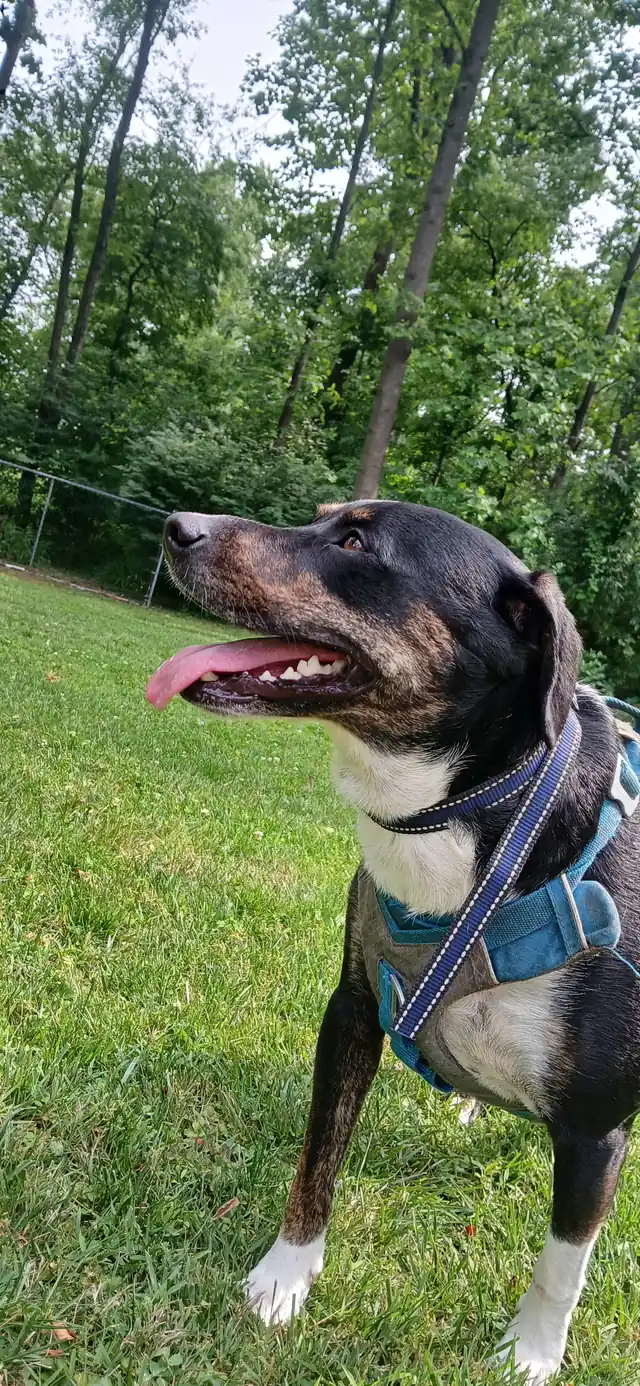
A dog in a blue harness with its tongue out, standing with trees behind
Working below the explosion point
We train under threshold, at the distance and intensity where your dog can still think, learn, and respond. Once a dog has tipped into panic, nothing useful is being taught. The skill is catching the subtle early signs and staying on the right side of that line.
Chaos gets replaced with predictable pattern games such as “1-2-3” and “Look At That” (LAT). Your dog gets a repeatable routine to trust, and learns to notice a trigger without escalating, turn away from it, and reconnect with you. Disengagement becomes the dog's own choice.
If your dog's needs reach past reactivity into leash skills, recall, and household structure, the Tailored Training Track covers that wider ground.
Chapter 03
Keeping the calm once sessions end
Behavior often returns when structure disappears, so this work is as much about you as it is about your dog. You learn to read the early signs of stress, manage distance, reward recovery, and guide your dog through a hard moment with a steady hand.
The goal is a calmer, clearer handler your dog can trust. Anthony's method rewards faster recovery, not just quiet, and uses the same patterns every time so your dog always knows what comes next. If you would like a second set of eyes on what you are seeing at home, start with the free evaluation on the contact page.
“Anthony took the time to see Daisy privately, and with patience and skill earned her trust over several weeks of training.” Donald Pigeon, Google review.
Phases of progress
A roadmap, in order
Reactivity work needs a plan. Your dog feels safer first, and only then do we ask for harder behavior in harder places. The pace follows your dog, not a calendar.
Duration and cost are not fixed up front. Pricing is set after the free evaluation, once Anthony has seen what your dog is dealing with.
Assessment and safety
Identify your dog's triggers, thresholds, environment, and current patterns.
Stabilization
Reduce rehearsal of reactive behavior and create calmer routines.
Skill building
Teach focus, disengagement, recovery, and safer choices.
Real-world reliability
Practice around controlled triggers before moving toward more challenging environments.
For dogs who struggle with triggers
Is this the right program for your dog?
It may be, if any of these sound like your week:
- Your dog barks, lunges, or pulls toward dogs or people on walks.
- Your dog reacts to sounds, movement, visitors, or neighborhood activity.
- Your dog becomes overwhelmed and has trouble calming down.
- Your dog seems anxious, frustrated, or easily triggered.
- You avoid walks, guests, or public places because of your dog's reactions.
- You want help without prong collars, e-collars, or punishment-based methods.