Puppy Biting and the First Weeks Home: Bite Inhibition, Chewing, Crate and Potty Basics
Puppies explore the world with their mouths, so your job is to teach gentle and give them plenty to chew.
October 6, 2026 · 4 min read
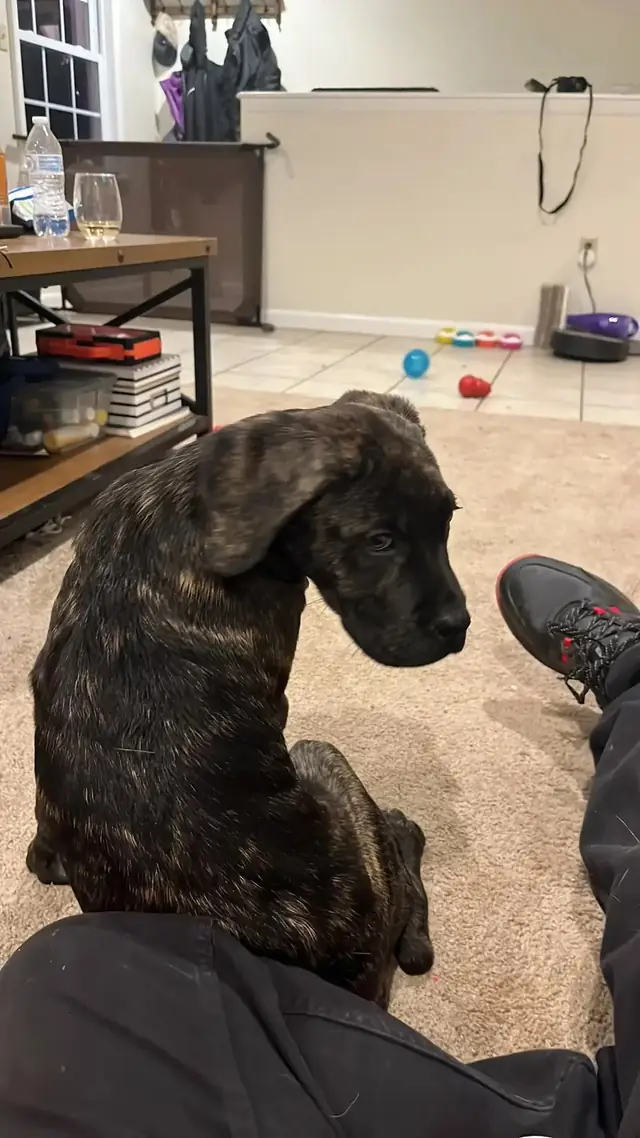
You brought home a puppy, and now your hands, ankles and favorite socks are under attack. Needle teeth, zoomies at nine at night, a puddle by the back door. It's exhausting, and it's normal. The first weeks go smoother with a few simple routines, so here's the plan.
Why puppies bite
Puppies don't have hands. They investigate with their mouths, play with their mouths, and soothe sore gums by chewing. Biting at human skin isn't aggression. It's a young animal who hasn't yet learned that people are much more fragile than littermates.
Overtired puppies get mouthier, too. A puppy who's nipping like crazy at the end of a long day often needs a nap more than a lecture.
Teaching bite inhibition
Bite inhibition means learning to control how hard to use their mouth. Puppies learn some of it from their littermates, who yelp and stop playing when a bite is too rough. You can teach the rest. Your goal is not zero mouth contact on day one. It's softer mouths first, then no teeth on skin at all.
- When teeth hit skin, say 'Ouch' in a calm voice and stop play right away. Stand up or turn away for a few seconds.
- When your puppy returns with a gentler mouth, mark and reward, then resume play.
- If your puppy keeps biting clothes or hands, redirect to a toy. Trade a tug toy for your hand and play with the toy.
- If your puppy is too wound up to stop, calmly put them in their pen or crate with a chew for a short break.
Don't hold your puppy's mouth shut, flick their nose or pin them down. Those methods add fear and frustration and tend to make mouthing worse. Calm, consistent responses teach the lesson without damaging trust.
Give chewing a better outlet
A puppy needs to chew. Telling them not to is like telling them not to breathe. Give them a rotation of safe, appropriate options and keep the rest of your house out of reach.
- Rubber chew toys sized for your puppy, so they can't be swallowed.
- Stuffed toys with a little wet food inside, then frozen for longer-lasting work.
- Lick mats and slow feeders for meals.
- A pen with a few different textures to explore.
Check with your vet about which chews are safe for your puppy's age and size, and always supervise. Swap toys out every few days so old ones feel new again.
Potty routine basics
A young puppy can't hold it long, so the routine matters more than the puppy's willpower. Take your puppy out first thing in the morning, right after they wake from any nap, after meals, after play, and last thing before bed. Go to the same spot every time. Stand still, stay boring, and say a cue like 'Go potty' once.
The moment your puppy finishes, mark and reward right there, outside. A treat tossed after you walk back in is too late to connect the dots. If you can, add a short play session or sniff walk as a bonus.
Accidents will happen. Don't scold your puppy or push their nose in anything. Clean it up with an enzyme cleaner so the smell doesn't invite a repeat, and think about what you missed: a longer gap, too much freedom, an overlooked signal like sniffing and circling.
Crate basics
A crate gives your puppy a safe den and gives you a break. Make it a great place. Feed meals in there, toss treats inside, and give a stuffed chew when you close the door. Start with a minute or two with you in the room. Build up gradually. Never use the crate as a punishment.
Young puppies need potty breaks often, including overnight at first, so a long stretch in the crate is not a plan. Ask your vet how long your puppy can reasonably wait, and set your schedule around the answer. Take the puppy straight outside when they come out of the crate.
Build the day around sleep and structure
A good puppy day is short bursts of activity and lots of rest. Play, then potty, then crate or pen for a nap. Repeat. A puppy who sleeps enough bites less and learns more. It can feel like you're doing the same thing over and over, and that's exactly the point. Predictable days build predictable puppies.
Also ask your vet about when your puppy can safely meet other dogs and visit public places, and plan your socialization around that advice.
When your puppy is ready for more
The Echo Dogs Training Puppy Foundations Program is built for puppies and adolescent dogs from five months to one year. It runs six weeks with 12 private lessons, covering marker training, crate manners, calm greetings, loose-leash walking and recall foundations, and it's listed at $1,197 - $1,225. Your puppy may be younger than five months right now. Call (215) 532-3388 for a free evaluation and ask what makes sense at their age.
Echo Dogs Training, (215) 532-3388
Call (215) 532-3388