Stop Your Dog From Jumping on Guests
Jumping is a dog saying hello the only way they know, so teach a better hello and pay for it.
October 6, 2026 · 4 min read
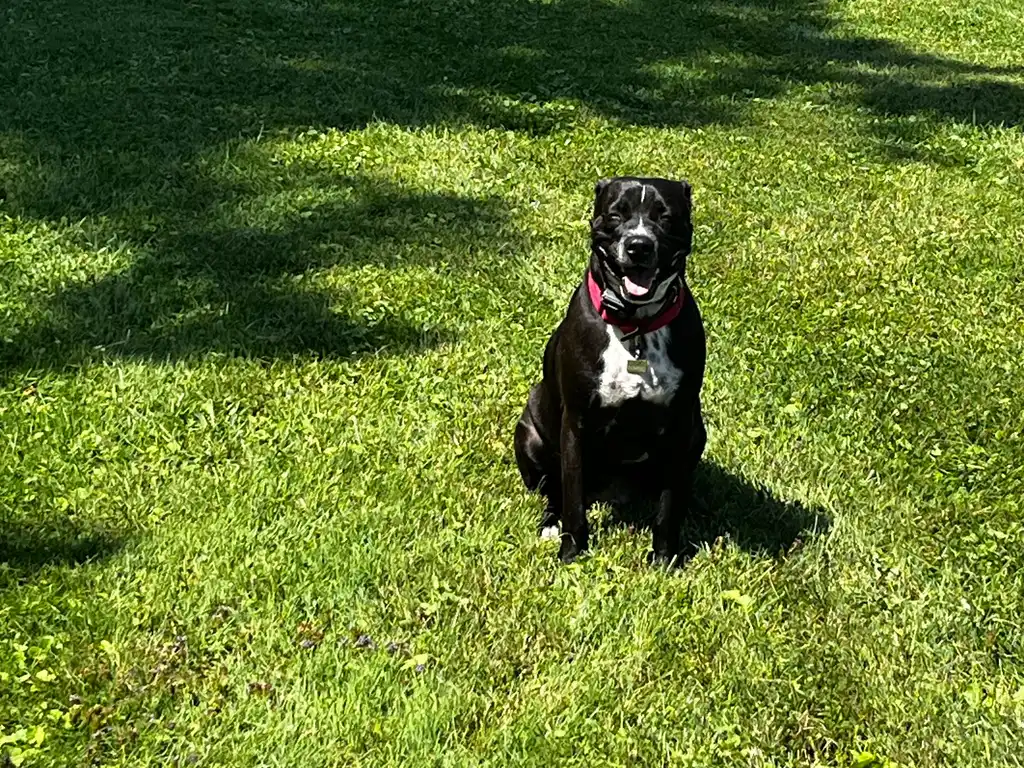
The doorbell rings. Your dog launches off the couch, hits the front door at full speed, and by the time you've opened it, your guest has muddy paws on a clean shirt. Everyone laughs politely and nobody enjoys it. Here's how to change that, step by step.
Why dogs jump
Dogs greet each other face to face, and people's faces are way up there. Jumping is a dog trying to say hello properly. It also gets results. A guest pushes the dog away, a family member says 'Off!', someone laughs. All of that is attention, and for a dog that wants attention, even a scolding is a payoff.
So the plan isn't to punish jumping. It's to make four paws on the floor the way to get every good thing a dog wants: attention, treats, and access to the guest.
Manage first, train second
Every time your dog jumps successfully, they get better at it. Until the skill is solid, stop the rehearsals. Before guests arrive, put your dog behind a baby gate, in another room with a chew, or on a leash attached to something sturdy. This isn't a punishment. It's you controlling the situation so you can set your dog up to win.
Teach a place cue
'Place' means go to your bed or mat and stay there until released. It gives your dog a job at the exact moment they'd otherwise be hurling themselves at the door. Teach it on a quiet day with no guests around.
- Put a mat or bed a few steps from the front door. Toss a treat onto it and mark when your dog steps on.
- Repeat until your dog heads for the mat on their own. Then name it: say 'Place' as they go.
- Reward your dog for lying down on the mat, and feed them there so the mat stays a good spot.
- Add time. Reward after two seconds, then five, then fifteen, then longer.
- Add distance. Stand a step away, then across the room, then at the door.
Door manners
The door is the real trigger, so give it rules. Practice without guests first. Put your hand on the knob. If your dog moves, take your hand off. When your dog holds still, open the door an inch. If they move, close it. They quickly learn that the door opens when they stay put.
With a real guest, clip on a leash or send your dog to place before you open anything. Reward calm behavior at the threshold with small treats delivered low, near the floor. Low treats keep a dog's head down and paws grounded.
Coach your guests
Your friends mean well and will undo your work with a cheerful 'Hey buddy!' and a pat on the chest. Tell them the plan before they come in. A short script works.
- Ignore the dog until all four paws are on the floor.
- Pet only while the dog stays calm. If the dog jumps, stop touching and step back.
- Don't say 'Off' or push. Turn sideways and wait for four paws to land, then try again.
- Drop a treat on the floor to keep the dog's head down.
Kids need the same script, with an adult close by. Children get excited and move fast, which fires up dogs even more.
Practice the doorbell
Most dogs start the show at the sound of the bell, so give it its own practice. Ring it yourself, or have a helper tap it. Say nothing. If your dog runs to the door, calmly guide them to place and reward. Then ring again. Do this in short sessions, five or six rings at a time, and quit while things are going well.
Keep the early reps boring and low drama. In the first few days, you might only get one second on the mat before the dog pops up. That's fine. Reward it, reset, and ring again. Within a couple of weeks of daily practice, the bell starts to predict 'go to my mat' instead of 'launch'.
What to expect
Jumping that's been rewarded for months won't vanish in an afternoon. Expect setbacks when a guest breaks the rules or your dog is extra excited. Go back one step, manage the situation, and keep paying for the right behavior. Consistency from everyone in the house matters more than perfection on any single visit.
If you'd like a coach in your corner, the Foundations to Freedom program covers calm greetings, door manners and impulse control across eight weeks and 16 private sessions, with homework after every session. Call (215) 532-3388 to set up a free evaluation, and Anthony will help you pick the best-fit program for your dog.
Echo Dogs Training, (215) 532-3388
Call (215) 532-3388More articles
How to Reduce Leash Pulling Without Corrections
Dogs pull because pulling works, so the fix is making a loose leash the thing that pays.
Barking and Lunging on Walks: What Reactivity Is and What Below Threshold Means
A reactive dog isn't a bad dog, and the fix starts with giving them enough distance to think.